
Shankar Mahadevan on AR Rahman's 'Communal' Remarks
🚨 Breaking Bollywood News Alert! Get the complete inside story. Updated January 19, 2026.
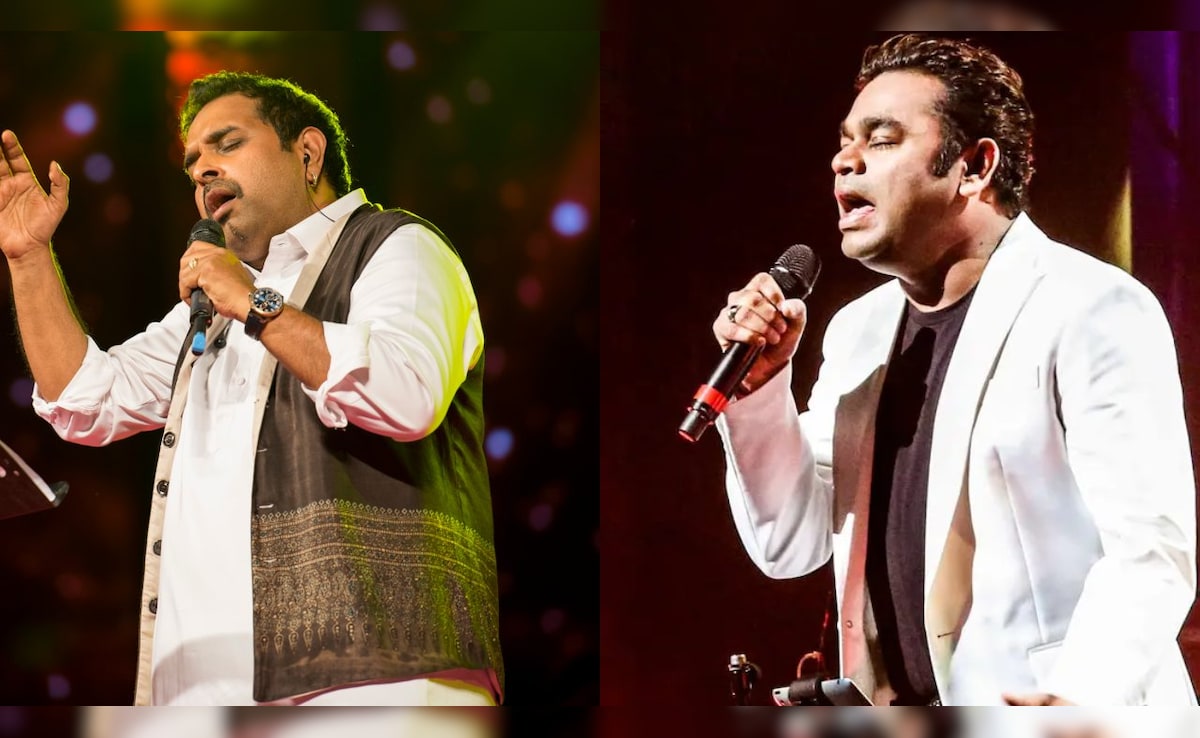
Shankar Mahadevan On AR Rahman's 'Communal' Remark: 'Non-Music People Decide Fate Of Your Music'
📰 RSS Feed Image
📖 Table of Contents
🎬 Latest Development: Shankar Mahadevan on AR Rahman Controversy: ‘Non-Music People Decide Fate Of Your Music’
Mahadevan Backs Rahman Amidst Row
📋 What You Need to Know
The ongoing controversy surrounding AR Rahman's recent remarks, which some have interpreted as communal, has drawn varied reactions from across the industry. Now, fellow musical stalwart Shankar Mahadevan has weighed in, offering a poignant observation that resonates deeply within the artistic community. Mahadevan stated, "'Non-music people decide fate of your music'," highlighting a broader concern about creative freedom and the influence of external forces on an artist's legacy. This commentary comes as Rahman himself reflected on a perceived "power shift" over the last eight years, where artistic expression appears increasingly vulnerable to public and political scrutiny, underscoring a growing tension between artistic integrity and external pressures.
🎭 Complete Story
The controversy stemming from AR Rahman's recent comments, which have been widely debated and in some quarters deemed 'communal', has elicited a significant response from his peers in the music industry. Among them, the respected composer and vocalist Shankar Mahadevan has offered a powerful perspective, articulating a sentiment shared by many artists. Mahadevan’s direct quote, “‘Non-music people decide fate of your music,’” zeroes in on the core issue of artistic autonomy and the impact of external, often non-artistic, interpretations on a musician’s work and reputation. This statement resonates particularly strongly because it addresses the increasing trend where an artist's entire body of work and public image can be jeopardized by remarks taken out of context or subjected to intense political or social scrutiny. Rahman himself had recently spoken about a "power shift" he observed over the last eight years, lamenting how the creative process and the artist's intent are often overshadowed by external narratives. Mahadevan’s commentary reinforces Rahman's observation, suggesting that the purity of musical creation and its reception are being increasingly dictated by individuals or groups who may lack a deep understanding of the art form itself, or who are driven by agendas unrelated to music. This situation creates a chilling effect on artistic expression, making musicians hesitant to voice opinions or engage in public discourse for fear of misinterpretation and severe backlash, thereby impacting their creative freedom and public perception.
📊 Industry Analysis
Shankar Mahadevan's observation, "'Non-music people decide fate of your music'," provides a critical lens through which to analyze the current climate for artists in India. This statement reflects a growing concern within the creative industries about the diminishing space for independent thought and expression. In an era of heightened political and social sensitivity, artists often find their work and personal remarks subjected to intense scrutiny, frequently interpreted through non-artistic filters such as communal or political ideologies. This trend stifles creativity and fosters an environment where self-censorship becomes a defense mechanism. The "power shift" that AR Rahman alluded to over the past eight years is indicative of a broader societal change where public opinion, often amplified by social media, can disproportionately influence an artist's career trajectory. This situation forces artists to walk a tightrope, balancing their authentic voice with the risk of public backlash, ultimately impacting the diversity and boldness of artistic output. The commentary from Mahadevan, a respected figure, highlights the urgent need for a more nuanced understanding of artistic expression and a clear distinction between creative work and personal opinions, preventing the latter from unfairly dictating the former's fate.
💬 Expert Commentary
"Shankar Mahadevan's statement perfectly encapsulates the existential dilemma faced by artists today, particularly in India," says Dr. Anjali Mehta, a cultural critic and musicologist. "When he says 'non-music people decide fate of your music,' he's highlighting the increasing external pressures from political groups, social media mobs, and even sections of the public who judge art and artists not on aesthetic merit or intent, but on perceived ideological alignment. This fundamentally undermines artistic freedom. AR Rahman's earlier reflections on a 'power shift' over the last eight years align precisely with this observation. It's a period where public discourse has become highly polarized, and any statement by a public figure, especially a revered one like Rahman, can be weaponized. The fear of misinterpretation and subsequent character assassination creates a chilling effect, forcing artists to be guarded, which ultimately impoverishes the creative landscape. It's a call for society to respect the artist's space and judge their art for what it is, rather than through a politicized lens."
🔗 Related Context
The sentiments expressed by Shankar Mahadevan and AR Rahman are not isolated but reflect a wider anxiety among artists across various fields, from cinema to literature, about the erosion of creative autonomy. Similar concerns have been voiced by filmmakers whose works face censorship or boycotts based on non-artistic grounds, and writers who face backlash for expressing opinions. This phenomenon is closely linked to the rise of social media as a powerful, albeit often unmoderated, platform for public opinion, capable of rapidly mobilizing support or condemnation. The perceived "power shift" also relates to the changing dynamics of cultural gatekeepers, where traditional critics and industry experts are sometimes overshadowed by populist sentiment or politically motivated narratives. This creates an environment where artistic merit can take a backseat to public perception, making the journey of creative expression increasingly fraught with external challenges and pressures.
🔍 Explore More Bollywood Content
Stay connected with the latest happenings in Hindi cinema:
Latest box office numbers and film business analysis
First look at movies coming soon to theaters
Breaking news from the world of Hindi cinema
💡 Visit Hindi Cinema News for more.
🎯 Key Takeaways
Shankar Mahadevan's insightful commentary regarding AR Rahman's 'communal' remarks sheds crucial light on the challenges faced by artists in contemporary society. His observation that "'Non-music people decide fate of your music'" powerfully articulates a widespread concern about the erosion of creative freedom and the undue influence of external, often non-artistic, forces on an artist's legacy. This echoes AR Rahman's own reflections on a "power shift" that has made artistic expression increasingly vulnerable to scrutiny. The dialogue initiated by these musical stalwarts is vital for fostering a healthier ecosystem where artists can create and express themselves without fear of unfair judgment or character assassination. It's a call for audiences and critics alike to engage with art and artists with nuance, respect, and a deeper understanding of the creative process itself.
❓ Frequently Asked Questions
Q: When did this news break?
A: This story was reported today with comprehensive coverage as details emerge.
Q: What makes this significant?
A: This development represents an important moment in the Hindi film industry.
📢 Stay Updated
Don't miss breaking entertainment news! Follow us for real-time updates.
What's your take? Share your thoughts in the comments!
