
Namit Malhotra Links Ramayana to Dune 3 & Odyssey
🚨 Breaking Bollywood News Alert! Get the complete inside story. Updated July 14, 2026.
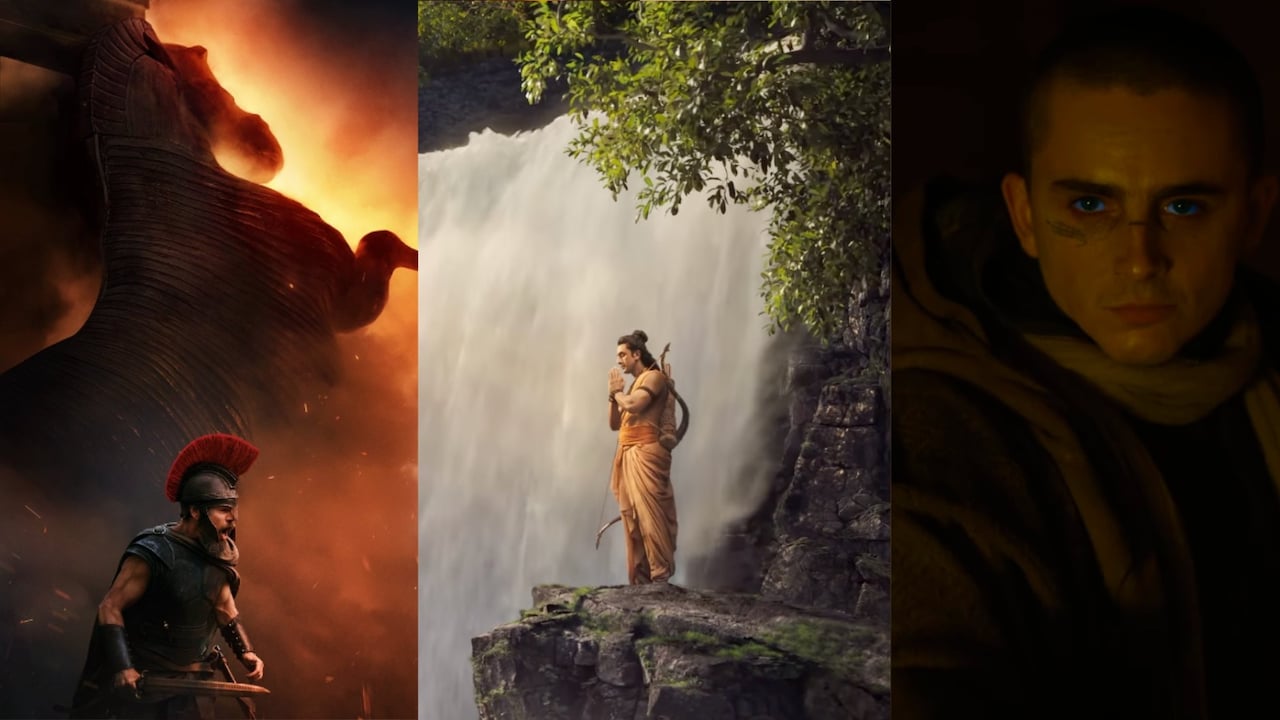
When Namit Malhotra Compared Ramayana With Dune 3 And The Odyssey
📰 RSS Feed Image
📖 Table of Contents
🎬 Latest Development: Namit Malhotra Elevates 'Ramayana' Comparison to 'Dune 3' and 'The Odyssey'
Ramayana's epic global vision.
📋 What You Need to Know
Namit Malhotra, the visionary producer behind the ambitious 'Ramayana' adaptation, has set an exceptionally high bar for his upcoming project. In a bold move, Malhotra recently drew parallels between his cinematic interpretation of the ancient Indian epic and global storytelling benchmarks like 'Dune 3' and 'The Odyssey'. This comparison immediately signals the immense scale, profound depth, and universal appeal he aims to achieve with the saga. With 'Ramayana Part One' slated for a grand Diwali 2026 release and the second installment expected on Diwali 2027, Malhotra's vision aims to transcend cultural boundaries and position the Indian epic on the global stage as a narrative of unparalleled grandeur and timeless relevance.
🎭 Complete Story
Namit Malhotra's audacious comparison of his 'Ramayana' adaptation to 'Dune 3' and 'The Odyssey' underscores his profound ambition to craft a cinematic experience that resonates universally while honoring its Indian roots. By invoking 'Dune 3', Malhotra highlights the technological prowess, immersive world-building, and intricate narrative complexity he envisions for the film, akin to the critically acclaimed sci-fi epic. The mention of 'The Odyssey' emphasizes the timeless, archetypal journey of its hero, the philosophical underpinnings, and the enduring human themes that 'Ramayana' profoundly explores. Malhotra's rationale extends beyond mere spectacle; he aims to capture the deep emotional core, moral dilemmas, and epic scope that define the original text, translating it into a visual language accessible to a global audience. The production is reportedly leveraging cutting-edge VFX technology from DNEG, Malhotra's own Oscar-winning company, to bring the mythical world of Ayodhya, Lanka, and the vast landscapes of ancient India to life with unprecedented realism and grandeur. This technological emphasis, combined with a meticulous approach to storytelling, is intended to elevate 'Ramayana' beyond a regional epic into a global cinematic event. The strategic release dates of 'Ramayana Part One' during Diwali 2026 and 'Part Two' on Diwali 2027 further signify the immense confidence and long-term planning invested in this monumental project, aiming to establish it as a perennial holiday blockbuster series in the vein of major Hollywood franchises.
📊 Industry Analysis
The trend of adapting Indian epics for the big screen with a global outlook represents a significant evolution in the Indian film industry. For decades, mythological films were primarily targeted at domestic audiences, often with varying production values. However, with the advent of advanced VFX capabilities and a growing global appetite for diverse stories, producers like Namit Malhotra are now envisioning these narratives on an international scale. The comparison to 'Dune' and 'The Odyssey' is not just a marketing ploy; it signifies a strategic positioning of 'Ramayana' as a universal human story, rich in conflict, heroism, and moral philosophy, capable of transcending cultural barriers. This approach demands world-class production design, compelling screenwriting, and sophisticated visual effects, pushing the boundaries of what Indian cinema can achieve. The success of such projects could unlock new international markets for Indian content, challenging the traditional dominance of Hollywood blockbusters and establishing India as a significant player in epic storytelling globally. It also reflects a maturing industry willing to invest heavily in intellectual property with inherent cultural depth and universal themes, aiming for both critical acclaim and commercial success on a worldwide scale.
💬 Expert Commentary
"Namit Malhotra's vision for 'Ramayana' is incredibly ambitious, and his comparisons to 'Dune 3' and 'The Odyssey' are a testament to his global cinematic aspirations," comments Professor Arjun Gupta, a leading film historian and cultural critic. "This isn't merely about creating a grand spectacle; it's about recontextualizing an ancient Indian epic for a contemporary global audience, highlighting its universal themes of duty, love, sacrifice, and conflict. The challenge lies in maintaining the cultural authenticity and spiritual depth of the 'Ramayana' while making it accessible and engaging for viewers unfamiliar with its nuances. Leveraging cutting-edge technology from DNEG is crucial, but the heart of the story must remain paramount. If executed effectively, this adaptation has the potential to become a landmark achievement, not just for Indian cinema but for global storytelling, demonstrating the timeless power and relevance of our cultural narratives."
🔗 Related Context
The adaptation of Indian epics into cinematic experiences has a long and storied history, from early mythological films to more recent CGI-heavy spectacles. However, Malhotra's 'Ramayana' project stands in a league of its own due to its declared global ambitions and the scale of its comparisons. Other Indian films like 'Baahubali' have already demonstrated the immense potential of large-scale, fantasy-driven narratives to captivate audiences across linguistic and regional divides. Globally, the success of films like 'Lord of the Rings' and 'Game of Thrones' on television has proven the appetite for intricate, long-form epic storytelling. The strategic choice of Diwali 2026 and 2027 for the release dates also aligns with the tradition of major holiday releases in India, signifying the cultural and commercial importance of the project, aiming for maximum impact during festive seasons. This project is poised to be a significant milestone in how India's rich mythological heritage is presented on the world stage.
🔍 Explore More Bollywood Content
Stay connected with the latest happenings in Hindi cinema:
Inside stories and exclusive Bollywood entertainment news
Exclusive stories about your favorite Bollywood stars
Expert reviews and ratings of the latest Hindi films
💡 Visit Hindi Cinema News for more.
🎯 Key Takeaways
Namit Malhotra's bold declaration, comparing his 'Ramayana' adaptation to the likes of 'Dune 3' and 'The Odyssey', firmly establishes the monumental scope and global aspirations for this highly anticipated project. His vision transcends a mere retelling, aiming to create a cinematic saga that is technologically advanced, emotionally resonant, and universally appealing, much like the timeless epics he references. With Part One set for Diwali 2026 and Part Two for Diwali 2027, the stage is set for an unprecedented cinematic event that seeks to bridge ancient Indian mythology with contemporary global storytelling. As the world eagerly awaits, Malhotra's 'Ramayana' promises to be more than just a film; it aims to be a definitive cultural landmark that redefines how Indian epics are perceived and experienced worldwide, proving that ancient stories can indeed conquer modern screens.
❓ Frequently Asked Questions
Q: When did this news break?
A: This story was reported today with comprehensive coverage as details emerge.
Q: What makes this significant?
A: This development represents an important moment in the Hindi film industry.
📢 Stay Updated
Don't miss breaking entertainment news! Follow us for real-time updates.
What's your take? Share your thoughts in the comments!
