
Diljit Dosanjh's 'Double Standards' Remark: A Professor Responds
🚨 Bollywood News Update — 2026-11-22
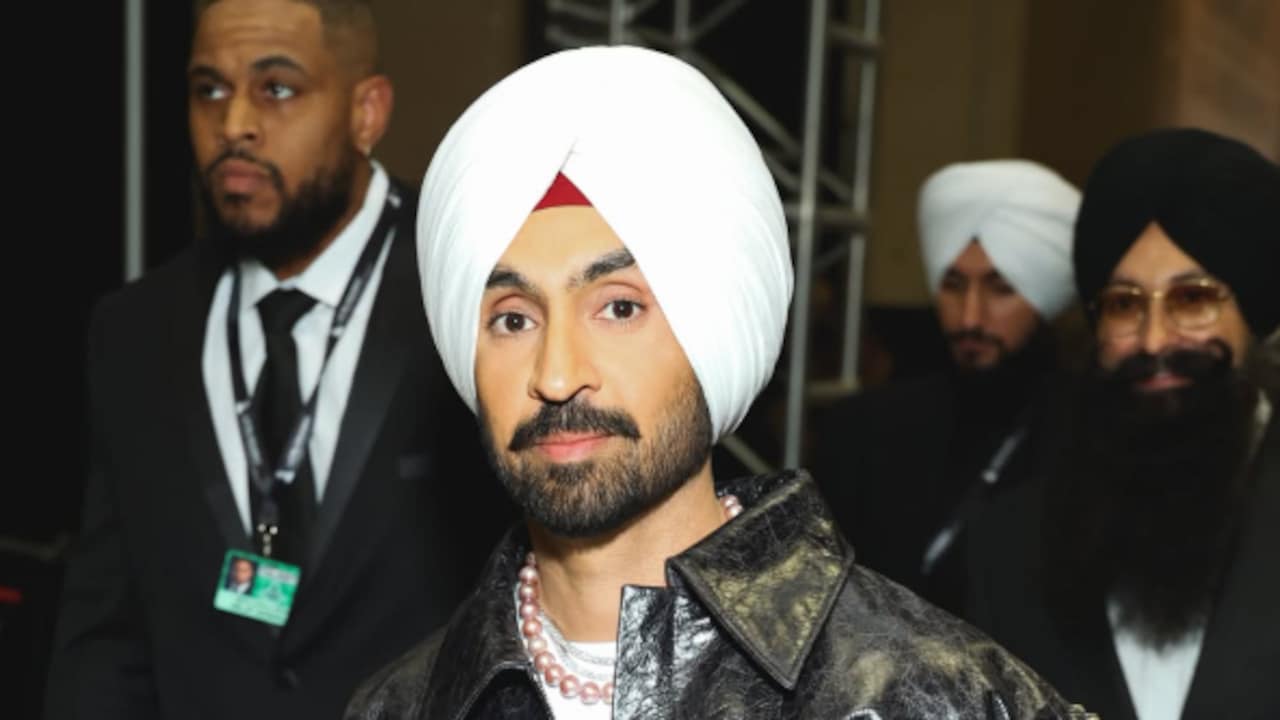
🎬 Latest Development: Beyond Diljit Dosanjh: Professor Debunks Singer's 'Double Standards' Claim, Citing Broader Scrutiny in Music Industry
Professor Challenges Diljit's Scrutiny Claims
📋 What You Need to Know
At a recent electrifying concert in Ahmedabad, global Punjabi sensation Diljit Dosanjh paused his performance to address a growing sentiment among artists: the feeling of being unfairly targeted. He candidly questioned the intense scrutiny his music and performances often face, drawing a direct comparison to the seemingly less controversial reception of Western artists like Coldplay, who previously graced the same stadium stage. This public remark ignited a significant debate, prompting a thoughtful response from an academic. A professor has since weighed in, asserting that the scrutiny is "not only against Diljit Dosanjh," suggesting a more complex, systemic issue at play rather than targeted criticism. This blog post delves into the nuances of Dosanjh's frustration and the professor's counter-perspective, exploring the multifaceted nature of artistic scrutiny in today's globalized music landscape.
🎭 Complete Story
Diljit Dosanjh's poignant moment at the Ahmedabad concert resonated deeply with many, highlighting a palpable frustration common among artists navigating diverse cultural expectations. He openly wondered why his artistic expressions, deeply rooted in Punjabi culture and often infused with contemporary global sounds, appear to attract a level of critical examination that a band like Coldplay might not encounter when performing in India. His "double standards" remark wasn't merely a complaint; it was a rhetorical question aimed at the perceived disparity in how different cultural performances are judged. For Dosanjh, whose star continues to rise globally, the feeling of being under a constant microscope, especially concerning cultural authenticity or potential 'Westernization,' can be stifling. He implicitly argued that the same audience or critical lens that celebrates a global pop act might scrutinize a local star's international appeal differently.
The professor's response, however, seeks to broaden the conversation beyond individual artists. By stating that the scrutiny is "not only against Diljit Dosanjh," the academic implies that what Dosanjh perceives as targeted criticism is, in fact, part of a larger, systemic phenomenon within the entertainment industry. This perspective suggests that public figures, particularly those who become cultural ambassadors or represent distinct identities, inherently face heightened expectations and diverse forms of scrutiny. Factors such as cultural context, the artist's perceived role in societal representation, and the ever-present digital magnifying glass contribute to this. The professor's view pivots the discussion from personal grievance to a more analytical examination of how fame, cultural identity, and global platforms intersect, leading to varied levels and types of public and media assessment, often regardless of individual merit or intention.
📊 Industry Analysis
The entertainment industry, particularly music, has always been a hotbed for public scrutiny, but the digital age has amplified this to unprecedented levels. Artists today navigate a complex web of cultural expectations, historical sensitivities, and instantaneous global feedback. The perceived "double standards" that Diljit Dosanjh highlighted are not uncommon. Western artists performing in non-Western countries, like Coldplay in India, often enjoy a certain cultural 'pass' or are viewed through a lens of appreciation for cultural exchange. Their performances are typically celebrated for bringing global music to a local audience, with less emphasis on the authenticity of their cultural engagement, unless it verges on appropriation. Conversely, artists like Dosanjh, who represent specific cultural identities and aim to transcend regional boundaries, often face intense pressure to maintain authenticity while innovating. They are scrutinized by both their traditional fanbase, who might fear cultural dilution, and by global audiences, who might seek genuine cultural representation.
This disparity underscores a broader trend: the "burden of representation." Artists who embody a particular cultural heritage are often expected to be its flawless ambassadors, and any deviation from perceived norms can invite criticism. The scrutiny faced by Dosanjh could stem from various factors: the rapid evolution of Punjabi music on the global stage, the blending of traditional sounds with hip-hop or pop, and the constant debate around commercialization versus cultural purity. Moreover, the media's role in framing narratives, coupled with the immediacy of social media reactions, means that every artistic choice, from lyrics to stage presence, is subject to intense public dissection. This analysis reveals that while Dosanjh's frustration is valid, the scrutiny is less about him personally and more about the intricate dynamics of cultural identity, artistic evolution, and global consumption in the modern music industry.
💬 Expert Commentary
A leading cultural critic, reflecting on the Dosanjh-Coldplay comparison, posited, "While Diljit's sentiment is entirely understandable from an artist's perspective, the professor's broader point is crucial. Scrutiny isn't arbitrary; it's deeply embedded in the cultural context and the perceived role of the artist." They elaborated, "When Coldplay performs in India, they are largely seen as global entertainers bringing an international act. The expectation is primarily entertainment, not cultural commentary or profound representation of Indian identity. For Diljit, however, his very essence is intertwined with Punjabi culture, and as he gains global prominence, he inadvertently carries the weight of that representation."
The critic further explained, "This isn't about unfairness in a simplistic sense, but about differing lenses. An artist like Dosanjh is navigating a complex space where he's expected to be both culturally authentic for his base and globally appealing. Any perceived misstep, whether in language, theme, or fusion, can be seen as a betrayal or a dilution by some segments of his audience, or as a lack of understanding by others. Western artists, unless they explicitly venture into cultural commentary or appropriation, rarely face this double-edged sword. It's a testament to Dosanjh's influence that his actions spark such vital discussions about cultural evolution and artistic freedom, yet it also highlights the immense pressure on artists who serve as cultural bridges."
🎯 Key Takeaways
Diljit Dosanjh's candid remarks at his Ahmedabad concert served as a powerful articulation of a frustration widely felt by artists who find themselves at the intersection of cultural identity and global fame. His comparison with Coldplay effectively highlighted the perceived "double standards" in how different artists are scrutinized. However, the professor's insightful response reframes this sentiment, suggesting that the scrutiny is not singularly directed at Dosanjh, but rather a systemic aspect of being a prominent cultural figure in a globalized world. It's a complex interplay of cultural representation, audience expectations, media narratives, and the instantaneous feedback loops of the digital age. Understanding these nuances is crucial for both artists, who must navigate this intricate landscape, and audiences, who can foster a more informed and empathetic approach to artistic expression. Ultimately, this dialogue underscores the ongoing conversation about artistic freedom, cultural authenticity, and the responsibilities that come with wielding significant cultural influence.
📢 Stay Updated
Follow Hindi Cinema News for entertainment updates. Share your thoughts in the comments.
