
Mukesh Khanna Blasts Ranbir's Ramayana: Baahubali Warning
🚨 Bollywood News Update — 2026-11-12
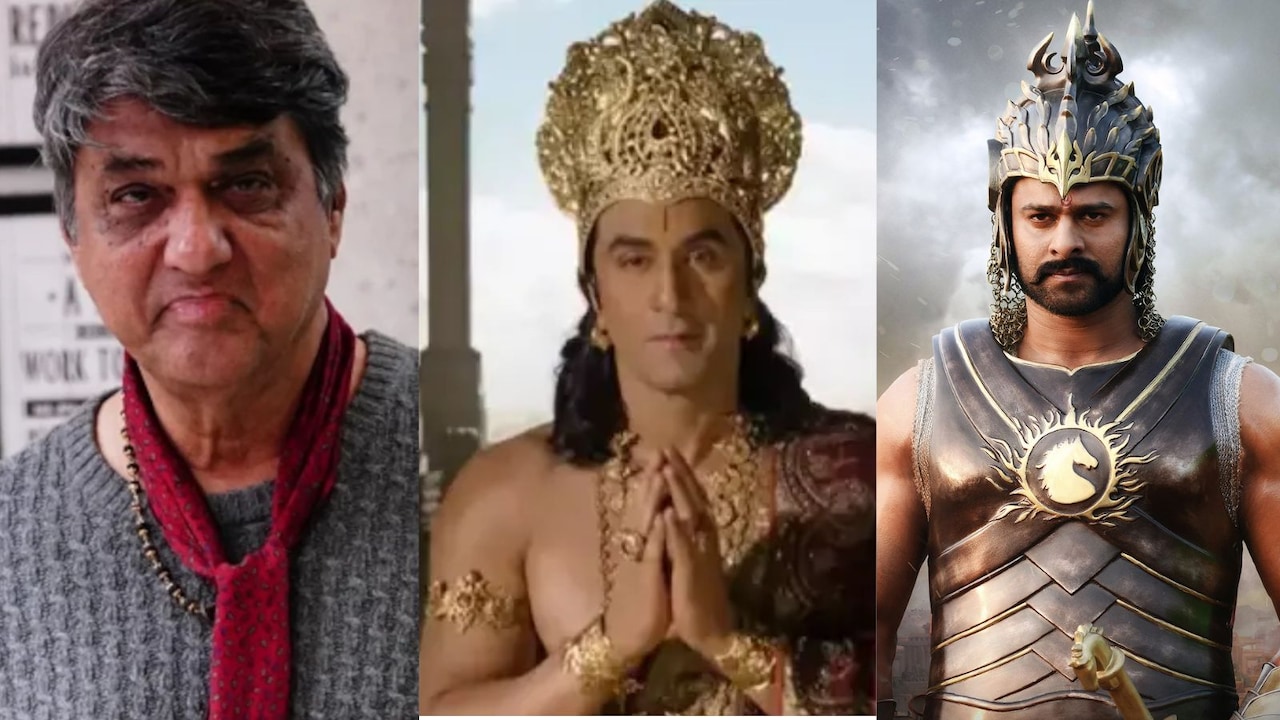
🎬 Latest Development: Mukesh Khanna Issues Stern Warning to Ranbir Kapoor's Ramayana: 'Don't Turn It Into Baahubali' Over Creative Liberties
Khanna warns Ramayana adaptation.
📋 What You Need to Know
Veteran actor Mukesh Khanna has ignited a fervent debate, lambasting the reported creative liberties being taken with Ranbir Kapoor’s upcoming film adaptation of the Ramayana. Khanna, known for his iconic portrayal of Bhishma in Mahabharat and Shaktimaan, explicitly warned filmmakers against prioritizing visual spectacle over the sanctity of the epic. His strong comments underscore a growing public concern regarding how revered religious texts are being interpreted for the big screen. The actor's comparison to *Baahubali* highlights his fear that modern filmmaking techniques might overshadow the spiritual and cultural essence of the ancient Indian narrative, potentially alienating a significant section of the audience.
🎭 Complete Story
Mukesh Khanna's recent remarks have sent ripples through the Indian film industry, directly challenging the creative approach to Ranbir Kapoor's highly anticipated Ramayana adaptation, reportedly directed by Nitesh Tiwari. Khanna's core criticism revolves around the perceived over-reliance on visual effects (VFX) and a desire to turn the sacred epic into a grand, action-oriented fantasy akin to S.S. Rajamouli's *Baahubali* franchise. "Just because you can create giant demons using large-scale visual effects and impress audiences, don't turn it into Baahubali," Khanna stated emphatically. His concern is not merely about aesthetic choices but about a fundamental misunderstanding, or perhaps a deliberate distortion, of the Ramayana's spiritual and cultural gravitas.
The actor, revered for his association with mythological characters, argues that the Ramayana is not merely a story ripe for cinematic embellishment but a foundational text deeply embedded in the collective consciousness of millions. Altering its core narrative, characters, or philosophical underpinnings in the name of 'creative liberties' is, in his view, a dangerous path. Khanna's apprehension stems from the belief that such adaptations risk reducing a profound religious and ethical treatise to a mere fantasy spectacle, stripping it of its inherent reverence and moral lessons. He implies that while *Baahubali* brilliantly succeeded as a fictional epic, the Ramayana carries an entirely different weight, demanding meticulous accuracy and respect.
This critique places significant pressure on the filmmakers, who must navigate the tightrope between cinematic innovation and cultural fidelity. The veteran actor's comments serve as a powerful reminder that while visual effects can enhance a story, they cannot replace its soul, especially when dealing with narratives as sacred and sensitive as the Ramayana. The debate now centers on whether the upcoming film can deliver a visually stunning experience without compromising the essence that makes the Ramayana a timeless epic for countless devotees.
📊 Industry Analysis
The Indian film industry has a long, complex history with mythological and historical epics. While these genres often promise grand scale and cultural resonance, they also come fraught with immense creative and commercial risks. The success of films like *Baahubali* has undoubtedly spurred a trend towards high-budget, VFX-heavy spectacles, leading many to believe that similar approaches can be applied to revered epics like the Ramayana. However, as Mukesh Khanna's comments highlight, the rules of engagement are distinctly different. *Baahubali* was a fictional narrative, granting its creators expansive artistic freedom. The Ramayana, conversely, is a sacred text, a part of India's cultural and religious fabric, and any deviation from its widely accepted narrative is met with intense scrutiny and often, severe backlash.
The recent controversy surrounding *Adipurush*, another big-budget Ramayana adaptation, serves as a stark warning. Despite its massive budget and star cast, the film faced widespread criticism for its colloquial dialogues, character portrayals, and perceived disrespect towards the source material. This public outrage, culminating in poor box office performance and legal challenges, underscores the deep emotional connection audiences have with these narratives. Filmmakers are constantly balancing the desire to appeal to a younger, global audience with modern sensibilities against the deeply ingrained traditional expectations of a devout viewership. The challenge lies in innovating cinematic language without trivializing or distorting the spiritual core of the epic. The industry is currently in a phase where technological prowess allows for unprecedented visual storytelling, but the wisdom of applying this solely for 'impressing audiences' rather than enriching the narrative remains a contentious point.
💬 Expert Commentary
"Mukesh Khanna's admonition resonates deeply with the ongoing discourse about artistic interpretation versus cultural sanctity," notes Dr. Kavita Sharma, a prominent cultural historian specializing in Indian epics. "The Ramayana is not merely a mythological tale; it's a living tradition, a moral compass for millions. Filmmakers often mistake reverence for rigidity, believing they must 'modernize' or 'cinematize' it to make it relevant. But relevance, in this context, lies in its timeless wisdom, not in its visual effects budget."
Film critic Rajeev Menon adds, "The *Baahubali* comparison is apt because it highlights a fundamental category error. *Baahubali* created its own universe, its own mythology. The Ramayana already *is* a universe, a mythology. The creative license allowed for one cannot be blindly applied to the other without inviting significant cultural friction. The challenge for directors like Nitesh Tiwari isn't just to tell a story, but to re-tell a deeply cherished one with respect, insight, and an understanding of its spiritual weight. Spectacle without soul is ultimately hollow, especially when dealing with narratives of such profound public sentiment." These perspectives reinforce the idea that innovation must serve the narrative's essence, not overpower it.
🎯 Key Takeaways
Mukesh Khanna's impassioned warning regarding Ranbir Kapoor's Ramayana adaptation underscores a critical tension in contemporary Indian cinema: the balance between creative interpretation and cultural reverence. His concern that the epic might be reduced to a VFX-heavy spectacle akin to *Baahubali* highlights a legitimate fear among many who hold the Ramayana sacred. As previous adaptations have shown, filmmakers venturing into such revered territory walk a tightrope, where artistic freedom must be tempered with profound respect for tradition and deeply held beliefs. The success of Nitesh Tiwari's vision will ultimately depend on its ability to weave a visually compelling narrative without compromising the spiritual and ethical core that has made the Ramayana an enduring beacon for generations. The industry must recognize that while spectacle can entertain, authenticity and reverence are paramount when adapting narratives that are not just stories, but part of a nation's soul.
📢 Stay Updated
Follow Hindi Cinema News for entertainment updates. Share your thoughts in the comments.
