
Nandita Das: "Art Will Slowly Become Science" at AI Summit
🚨 Breaking Bollywood News Alert! Get the complete inside story. Updated February 18, 2026.
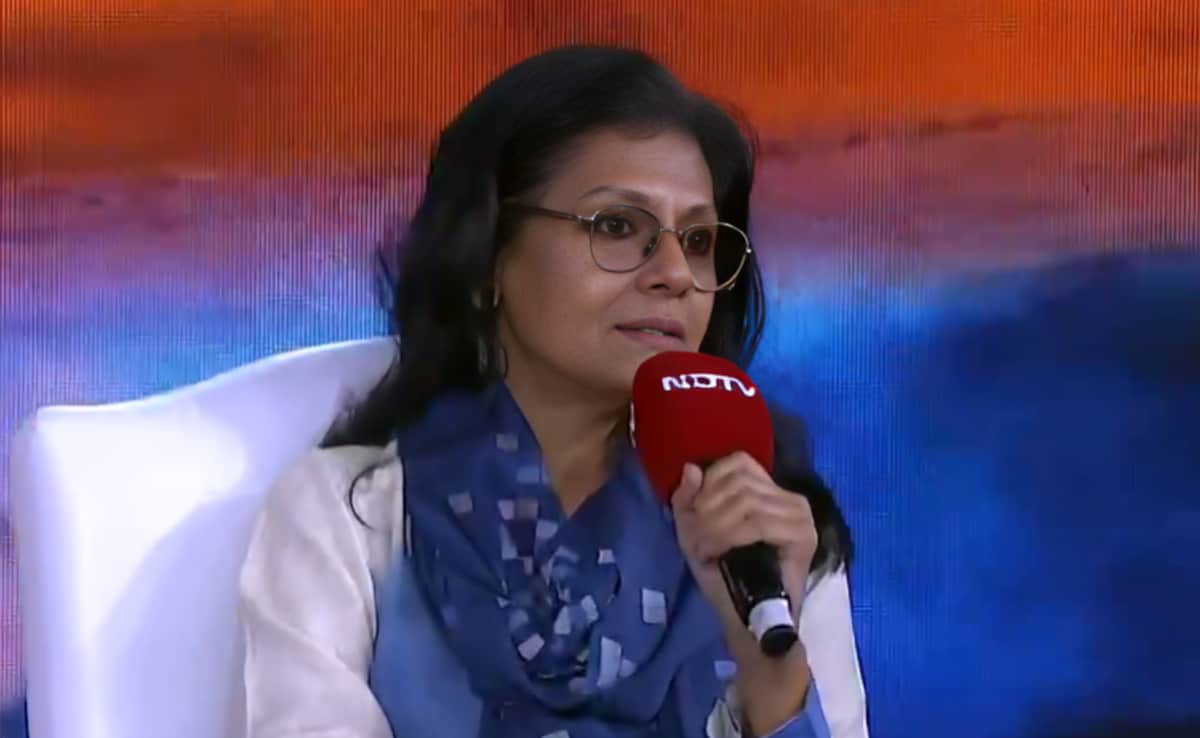
Nandita Das At NDTV AI Summit 2026: "Art Will Slowly Become Science"
📰 RSS Feed Image
📖 Table of Contents
🎬 Latest Development: Nandita Das Declares "Art Will Slowly Become Science" at NDTV AI Summit 2026, Highlights Mainstream Cinema's Formulaic Nature
Art, Science, AI, and Cinema's Future
📋 What You Need to Know
In an era increasingly defined by data, algorithms, and artificial intelligence, the boundaries between human creativity and scientific precision are blurring. This fascinating convergence was a central theme at the NDTV AI Summit 2026, where acclaimed filmmaker and actress Nandita Das delivered a thought-provoking address. Das, known for her artistic integrity and socially conscious cinema, posited that "art will slowly become science." Her statement was not merely a futuristic prediction but was intrinsically linked to her critique of mainstream cinema, which she observed has already become "increasingly formula-driven." This dual perspective from Das opens up a crucial dialogue about the evolving nature of artistic expression, the impact of technology, and the delicate balance between creative freedom and commercial viability in the world of filmmaking.
🎭 Complete Story
Nandita Das's assertion that "art will slowly become science" at the NDTV AI Summit 2026 is a profound observation on the trajectory of creative endeavors in the digital age. She implies that the intuitive, often unpredictable nature of artistic creation is increasingly being systematized, analyzed, and optimized through scientific principles and data-driven approaches. This transformation isn't necessarily about AI creating art from scratch, but rather about how data analytics, audience metrics, and predictive algorithms are influencing artistic choices, from script development to marketing strategies. The "science" in this context refers to the systematic application of knowledge to achieve a desired outcome, much like engineering, where creativity is harnessed and refined through quantifiable methods.
📊 Industry Analysis
Nandita Das's observations resonate deeply within the contemporary film industry, which is grappling with the pervasive influence of data and technology. The concept of "art becoming science" is evident in the growing use of AI and machine learning for various aspects of filmmaking. Algorithms are now employed to analyze scripts for commercial viability, predict audience reception, optimize casting choices based on star appeal metrics, and even generate marketing campaigns tailored to specific demographics. Streaming platforms, in particular, rely heavily on data to commission content, creating a feedback loop where past successes dictate future productions. This data-driven approach, while efficient for risk mitigation and maximizing profits, inadvertently pushes mainstream cinema towards formulaic narratives.
💬 Expert Commentary
"Nandita Das articulates a critical concern for the future of art," says Dr. Priya Singh, a professor of Film Studies at the University of Delhi. "The 'science' she refers to isn't just about AI creating art, but about the datafication of creative processes. When every artistic decision, from script to casting, is influenced by algorithms designed for commercial success, the spontaneous, intuitive, and often rebellious spirit of art is suppressed. Mainstream cinema becoming formula-driven is a direct consequence of this risk-averse, data-optimized approach, sacrificing originality for predictability."
🔗 Related Context
The debate over art and science is not new; artists and thinkers have grappled with it for centuries. However, the advent of AI has given it a new urgency. Historically, genres like Hollywood musicals or Bollywood masala films have relied on formulas, but Das's concern points to an unprecedented level of algorithmic influence. Other art forms are facing similar challenges: AI-generated music, AI-written novels, and AI-designed fashion are becoming increasingly common, prompting discussions about authorship, creativity, and the role of the human artist.
🔍 Explore More Bollywood Content
Stay connected with the latest happenings in Hindi cinema:
First look at movies coming soon to theaters
Breaking news from the world of Hindi cinema
Comprehensive coverage of the Indian film industry
💡 Visit Hindi Cinema News for more.
🎯 Key Takeaways
Nandita Das's assertion at the NDTV AI Summit 2026, that "art will slowly become science," coupled with her critique of mainstream cinema's formulaic nature, provides a profound commentary on the evolving landscape of creative expression. Her insights highlight the growing influence of data, algorithms, and commercial imperatives in shaping artistic choices, often at the expense of originality and creative risk-taking. While the efficiency and predictability offered by a scientific approach to art can be appealing, particularly to commercial ventures, Das's warning serves as a crucial reminder of the importance of preserving the intuitive, human element that defines true artistry. As technology continues to advance, the challenge for the film industry, and for artists globally, will be to harness these powerful tools without allowing them to dilute the very essence of human creativity and storytelling.
❓ Frequently Asked Questions
Q: When did this news break?
A: This story was reported today with comprehensive coverage as details emerge.
Q: What makes this significant?
A: This development represents an important moment in the Hindi film industry.
📢 Stay Updated
Don't miss breaking entertainment news! Follow us for real-time updates.
What's your take? Share your thoughts in the comments!
