
Rajat Kapoor on Hindi Cinema's Lost Feminine Hero
🚨 Breaking Bollywood News Alert! Get the complete inside story. Updated April 15, 2026.
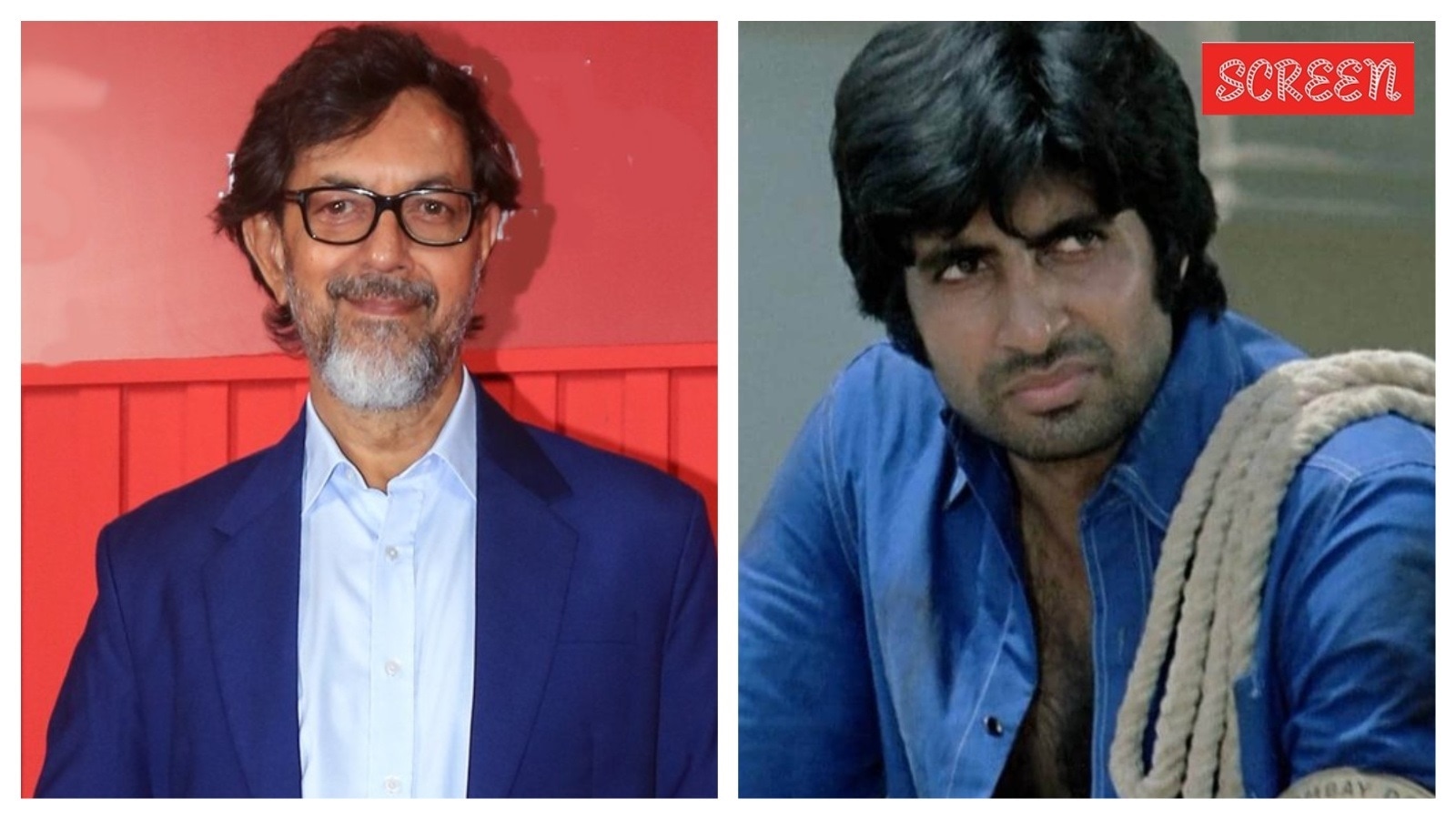
Rajat Kapoor feels Hindi cinema lost its ‘feminine’ hero with Amitabh Bachchan’s Angry Young Man in 1970s: ‘Only violent men on screen today’
📰 RSS Feed Image
📖 Table of Contents
🎬 Latest Development: Rajat Kapoor Laments Hindi Cinema Lost Its 'Feminine' Hero with Amitabh Bachchan's 'Angry Young Man' Era: 'Only Violent Men on Screen Today'
Rajat Kapoor critiques Hindi cinema's heroes.
📋 What You Need to Know
Veteran actor and filmmaker Rajat Kapoor has sparked a significant debate with his recent observations on the evolution of male protagonists in Hindi cinema. Kapoor articulated a compelling argument, suggesting that the industry underwent a pivotal shift in the 1970s, specifically with the rise of Amitabh Bachchan's 'Angry Young Man' persona. According to Kapoor, this iconic archetype, while groundbreaking, inadvertently led to the erosion of the 'feminine' hero, a character imbued with sensitivity, vulnerability, and nuanced emotions. He posits that contemporary Hindi cinema largely features a monochromatic representation of masculinity, dominated by 'only violent men on screen today.' This critique delves deep into the cultural impact of cinematic portrayals, questioning the long-term effects of a singular narrative on societal perceptions of masculinity and the broader scope of storytelling in Indian film.
🎭 Complete Story
Rajat Kapoor's discerning commentary highlights a critical turning point in Hindi cinema's narrative trajectory. Before the 1970s, he argues, heroes often embodied a softer, more introspective masculinity. Characters were allowed to be vulnerable, express emotions freely, and engage in relationships with a certain tenderness that balanced their strength. This 'feminine' quality, as Kapoor describes it, was not about effeminacy but rather a holistic portrayal of human emotion, allowing for a wider spectrum of character development. The advent of Amitabh Bachchan's 'Angry Young Man' in films like "Zanjeer" and "Deewaar" marked a powerful and necessary response to the socio-political disillusionment of the era. This archetype, characterized by righteous anger, rebellion against injustice, and a readiness for violence, resonated deeply with a generation. However, Kapoor suggests that its overwhelming success led to an industry-wide emulation, inadvertently narrowing the definition of a 'hero.' Filmmakers, seeking to replicate Bachchan's magic, began to prioritize aggression and physical prowess over emotional complexity, leading to a proliferation of characters who were primarily defined by their capacity for violence. This trend, according to Kapoor, has continued to this day, where modern cinematic heroes are often depicted as one-dimensional figures, lacking the emotional depth and diverse attributes that once graced the silver screen, leaving a void for more nuanced male representations.
📊 Industry Analysis
Rajat Kapoor's analysis touches upon a profound shift in gender representation within the Indian film industry, particularly concerning male protagonists. The 'Angry Young Man' phenomenon, while historically significant and culturally resonant, undeniably impacted the template for heroism. Before this era, actors like Dev Anand, Dilip Kumar, and Raj Kapoor himself, often played characters that were romantic, charming, and emotionally articulate. The shift towards hyper-masculinity can be seen as a reflection of changing societal anxieties and aspirations, but also as a limiting factor for artistic expression. The industry, driven by commercial success, often tends to replicate winning formulas, leading to a homogenization of character archetypes. This has implications not just for storytelling but also for societal gender roles, as cinema often mirrors and influences cultural perceptions. The absence of diverse masculine portrayals risks perpetuating stereotypes and limiting aspirational figures for younger generations. A broader industry analysis suggests that while action-oriented heroes have a guaranteed box office appeal, there is a growing critical discourse and audience yearning for more complex, emotionally intelligent male characters who challenge traditional notions of masculinity. This calls for filmmakers to consciously diversify their character arcs beyond the 'violent man' trope.
💬 Expert Commentary
"Rajat Kapoor raises a very pertinent point about the evolution of masculinity on screen," comments Dr. Priya Sharma, a film studies professor. "The 'Angry Young Man' was a product of its time, reflecting a collective frustration. However, its continued dominance, almost fifty years later, has indeed created a narrow definition of heroism. We've seen a gradual erosion of the 'lover boy' or the 'sensitive artist' archetype, replaced by characters whose primary mode of conflict resolution is physical aggression. This isn't just about entertainment; it's about what cultural narratives we are feeding our society. Cinema has a powerful role in shaping perceptions of gender. If the only strong men we see are violent, what message does that send? There's a clear need for a resurgence of multi-faceted male characters who can embody strength without resorting to perpetual aggression, embracing qualities that were once celebrated in our cinema."
🔗 Related Context
The discussion around the 'feminine' hero and the 'Angry Young Man' is not new in film discourse. Globally, cinematic representations of masculinity have been debated, from the stoic cowboy to the modern anti-hero. In Hollywood, films like "Brokeback Mountain" or recent indie dramas featuring male vulnerability have challenged traditional archetypes. In India, while the action hero remains prominent, there have been occasional attempts to break the mold. Films like "Dil Chahta Hai" or "Wake Up Sid" showcased urban, emotionally expressive male friendships and coming-of-age stories, offering a glimpse into alternative masculinities. However, these remain exceptions rather than the norm, proving Kapoor's point that the 'violent man' continues to hold sway in mainstream narratives, making his critique highly relevant in the ongoing conversation about diverse representation in cinema.
🔍 Explore More Bollywood Content
Stay connected with the latest happenings in Hindi cinema:
Comprehensive coverage of the Indian film industry
Expert reviews and ratings of the latest Hindi films
Inside stories and exclusive Bollywood entertainment news
💡 Visit Hindi Cinema News for more.
🎯 Key Takeaways
Rajat Kapoor's incisive observation about the 'feminine' hero being sidelined by the 'Angry Young Man' in Hindi cinema serves as a crucial introspection for the industry. While Amitabh Bachchan's iconic persona was a historical necessity and a cinematic marvel, its long-term impact on the diversity of male characterizations warrants serious consideration. Kapoor's lament that today's screens are dominated by 'only violent men' underscores a critical lack of emotional depth and varied portrayals of masculinity. This discourse is vital for encouraging filmmakers to move beyond formulaic archetypes and explore a richer, more nuanced spectrum of male characters. Reintroducing sensitivity, vulnerability, and emotional intelligence into heroic roles would not only enrich storytelling but also contribute positively to societal perceptions of masculinity, ensuring that Hindi cinema offers a more reflective and diverse mirror to human experience.
❓ Frequently Asked Questions
Q: When did this news break?
A: This story was reported today with comprehensive coverage as details emerge.
Q: What makes this significant?
A: This development represents an important moment in the Hindi film industry.
📢 Stay Updated
Don't miss breaking entertainment news! Follow us for real-time updates.
What's your take? Share your thoughts in the comments!
